
Rides and dreams
Why we dream about riding, and about losing control on the road
One night I dreamed of a ride that would not settle. Uphill, then downhill, then uphill again, and I kept switching bikes. I have spent six years building the platform behind YerevanRide, so bikes showing up in my dreams is no surprise. What surprised me was how much they had to say.
Some of the bikes were easy to ride. Some were awkward. The road never let me settle on one.
The road as a picture of how we move through life
Riding is about movement and control at the same time. You choose a direction, you set a pace, you brake, you lean into a turn. That makes the bike and the road a fitting picture for the mind to borrow when it is working through how a life is moving: who is steering, how fast things are going, whether the road ahead is clear.
There is research behind the simple idea that our days end up in our nights. In 2003, Michael Schredl and Frank Hofmann compared people's dream diaries with how much time they said they spent on everyday activities while awake. They found that the time a person spent on an activity during the day was reflected in their dreams, and that some activities, like reading and writing, showed up far less than others. The study did not produce a neat code book of symbols. It described a continuity: what fills your days has a way into your sleep. If you ride every day, or build things for people who do, the road has plenty of material to work with.
What a riding dream can reflect
I want to be careful here. A dream is not a forecast. A dream about a crash does not mean you will crash, and a dream about brakes says nothing about the brakes on your actual bike. What a dream can do is hold a feeling up where you can see it. Here are a few road images and the questions they raise for me:
- Brakes that don't work. Is something in your waking life moving faster than you would like, with no easy way to slow it down?
- A wrong turn. Did you recently make a choice you keep second guessing, or follow a route that someone else picked for you?
- Being late. What are you racing toward, and whose clock is it?
- Switching vehicles. Are you changing roles, tools or plans faster than you can get comfortable with any one of them?
These are questions, not answers. The answer sits in your own life, and you are the one who knows it.
My own dream, read back in daylight
Read back in daylight, the dream asked me a question more than it told me anything. Was I switching between things faster than I could settle into any one of them? Ups, downs, easy stretches, awkward ones. I didn't need a dictionary for that. I needed to notice it.
Lining my own dreams up showed me another scene that keeps coming back in different costumes. I am moving fast in something I don't fully control. Once it was a car being waved down by the police. Once it was a run I couldn't stop. Once it was a trip where someone else had the wheel. The vehicle changes and the feeling stays the same. I don't read it as a warning. I read it as a question: where in my life is someone else at the wheel?
That kind of noticing is what I built UnderSelf for. It is a dream journal: you speak a dream when you wake, and the reading uses your earlier dreams too, so over weeks you can see the themes you keep returning to. If a dream of your own put you on a road you couldn't steer, UnderSelf has a page on what a dream about losing control on the road can reflect, written in the same spirit: questions to bring into your day, not predictions about it.
Back on the bike
Here is my favorite part. The same picture that shows up as a runaway car at night can turn into something calm in the evening. Find a bike on the map, scan the code, and ride slowly through the city as the streetlights come on. There is nothing to catch and nobody else at the handlebars. You choose the hill and you choose when to stop.
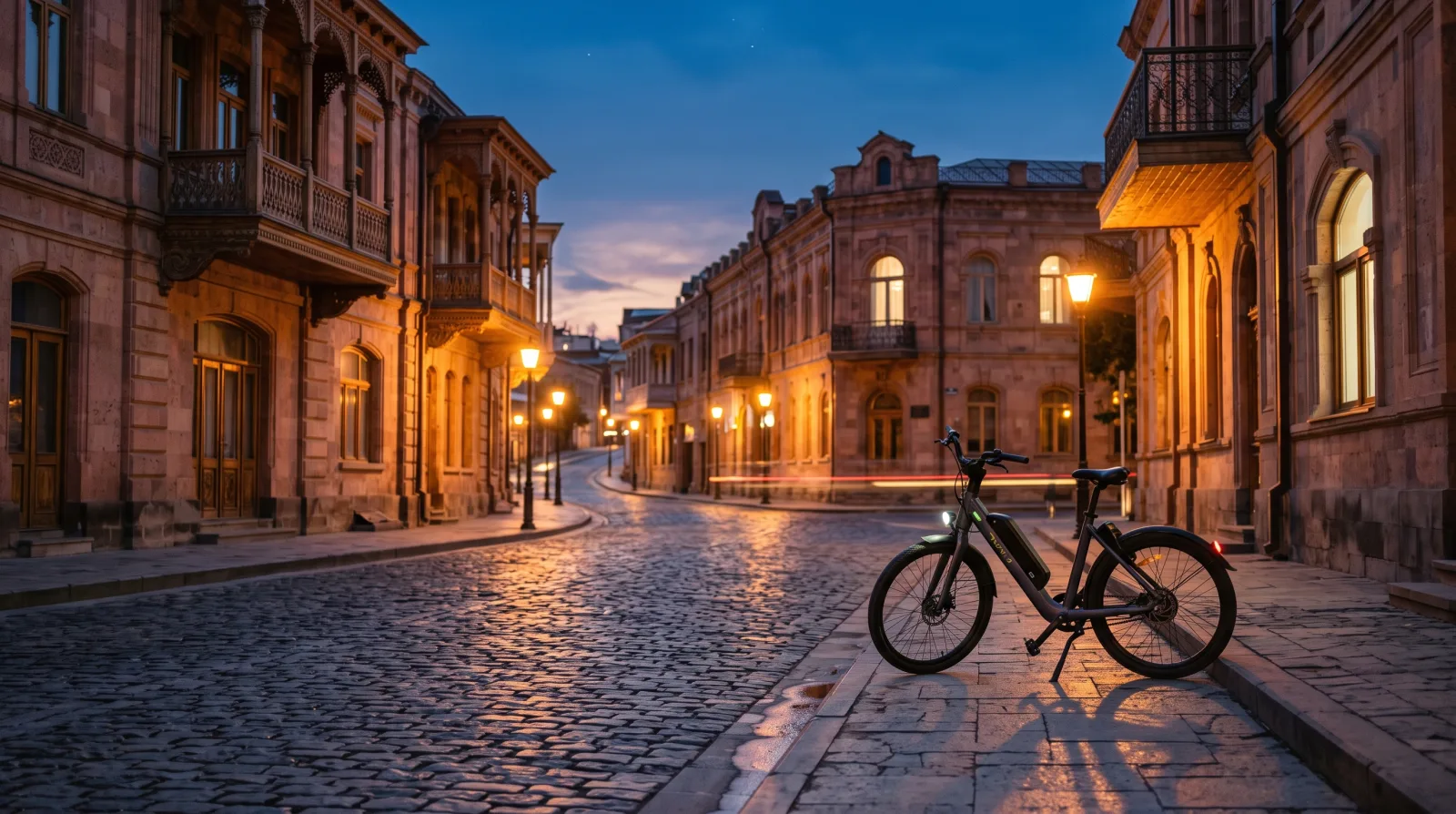
Yerevan in the evening is good for this. The stone buildings hold the last warm light, the streets get quieter, and a short loop is enough to let the day settle. I don't ride to analyze anything. I ride because it feels like the opposite of the dream: my hands on the brakes, my pace, my turn.
If you want to try it, here is how YerevanRide works, from finding a bike to locking it at the end of your ride. An easy evening ride where you set the pace is a good way to close a day, and maybe a good thing to carry into the night.
Source
Schredl, M., & Hofmann, F. (2003). Continuity between waking activities and dream activities. Consciousness and Cognition, 12(2), 298 to 308. doi.org/10.1016/S1053-8100(02)00072-7